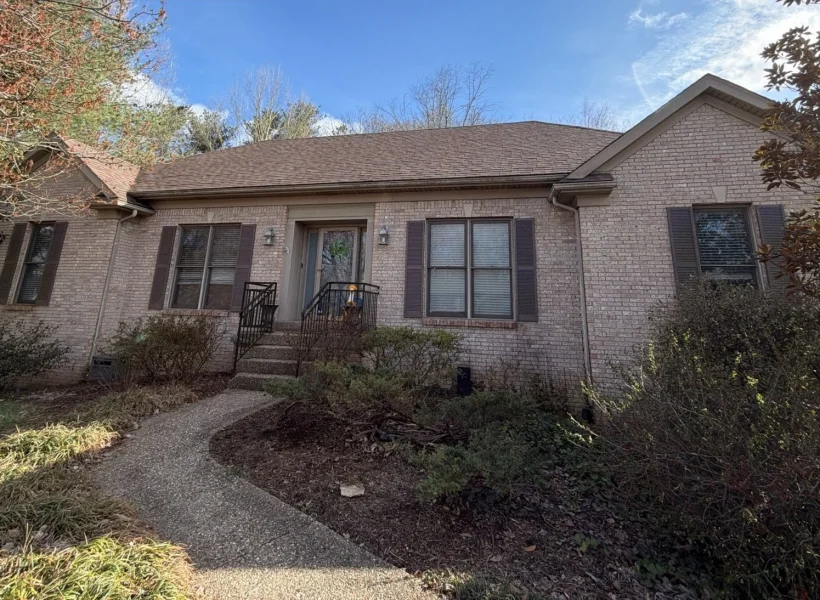
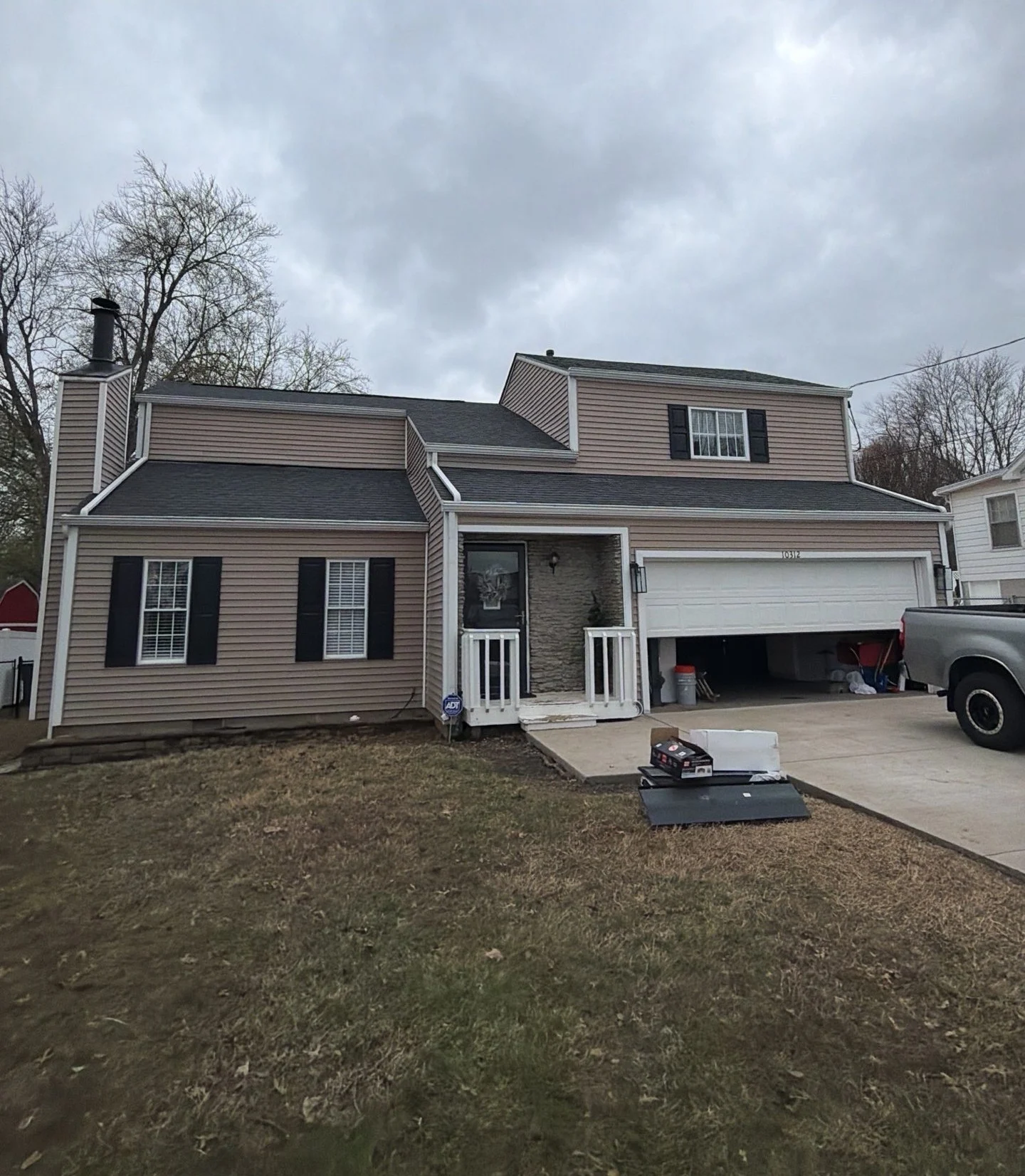

Decades-old board sheathing decks tell stories that plywood never could — individual planks stained with moisture cycling, gaps between boards where air and water have moved freely for years, and a structural history that becomes visible the moment the old shingles come off. This Douglass Hills brick ranch had all of that waiting underneath its storm-damaged surface, and when Ragnar Roofing showed up for a free inspection, the combination of documented hail strikes on the shingles above and compromised decking below built a file that insurance couldn’t reasonably deny. Full replacement approved. Tamko Titan XT installed. Three skylights freshly flashed. Chimney step flashing rebuilt. A classic Kentucky brick ranch wearing deep charcoal shingles that look better against red brick and navy shutters than anything it has worn before.
What Board Sheathing Decks Look Like After Decades
Homes built before plywood sheathing became standard were decked with individual boards — solid lumber planks running perpendicular to the rafters with deliberate gaps between them. That construction method was appropriate for the roofing products of its era, but it creates complications for modern replacements. The boards exposed during this tear-off showed moisture staining at their surfaces, darkening at joints where water had found entry points over multiple storm seasons, and the general condition of wood that has lived under a compromised roof for longer than it should have. Damaged sections were replaced with new material before underlayment went down — giving the Titan XT system sound, consistent fastening across the full deck rather than shingles secured into wood that couldn’t hold them reliably.
Deck repair work like this disappears entirely once the new shingles are on, but it’s the difference between a replacement that performs for thirty years and one that develops problems within five.
H2: Building the Insurance Case From the Shingle Down
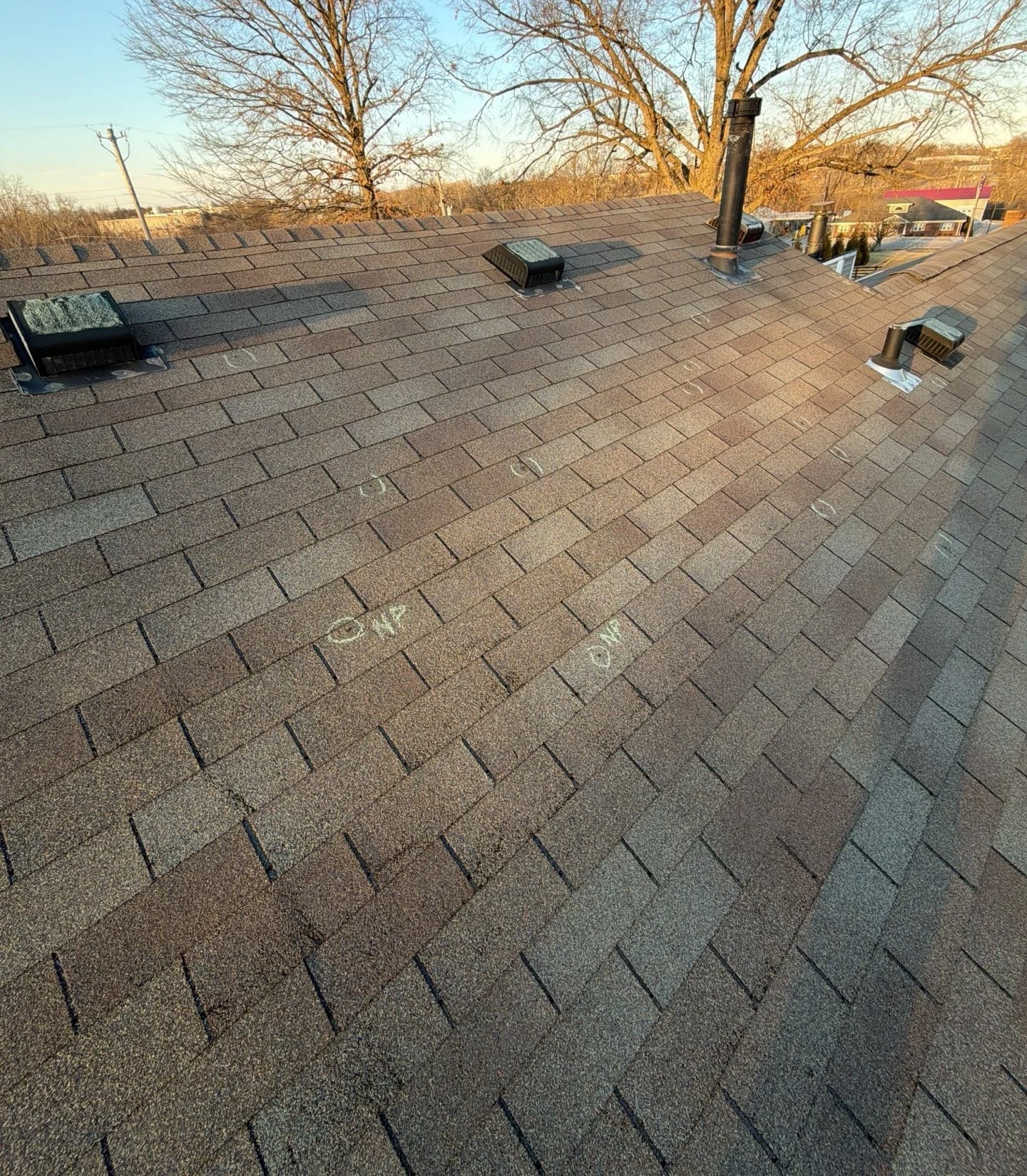
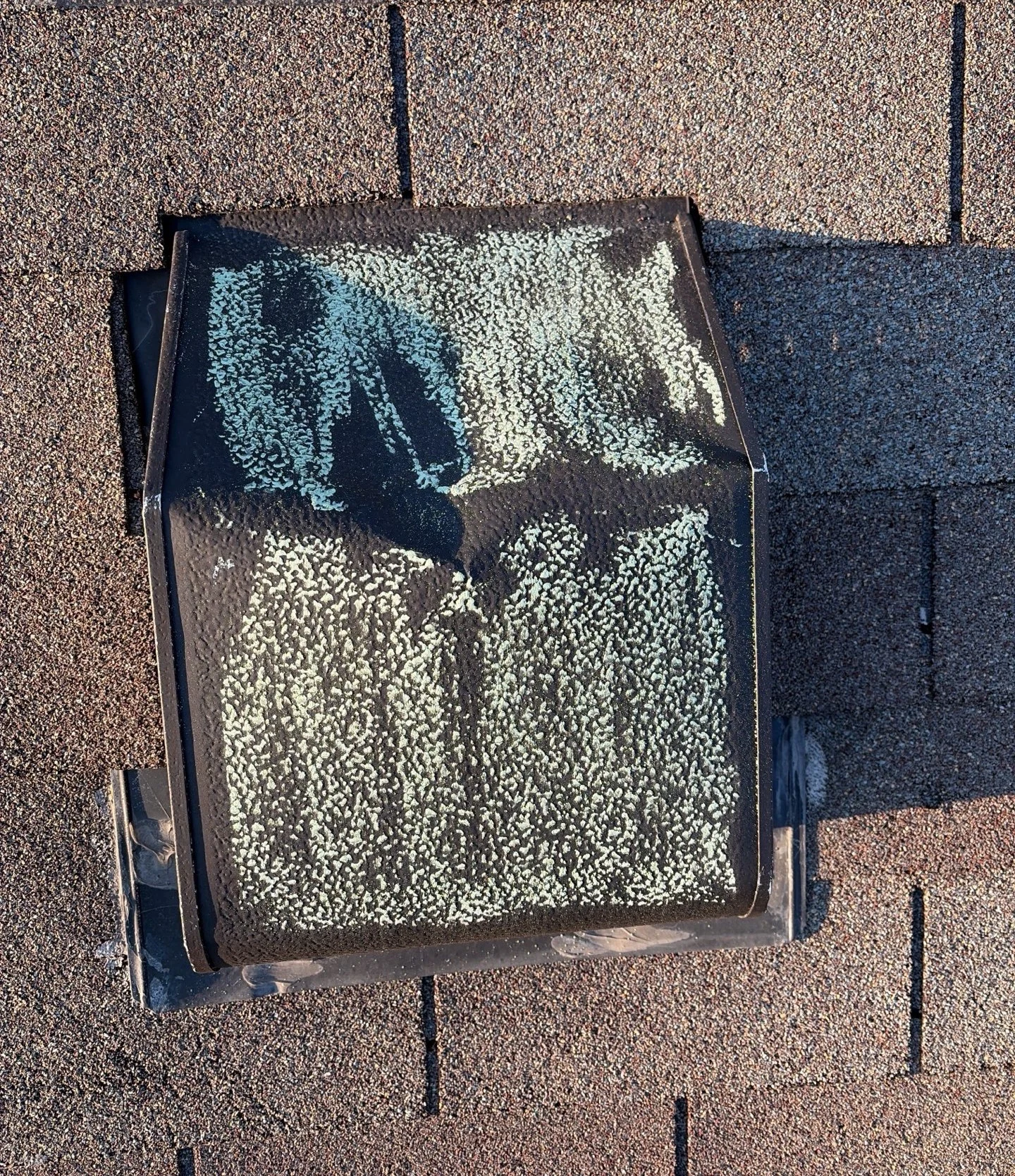
The hail damage inspection documented individual impact sites across the existing shingle slopes — chalk-circled strike points showing granule displacement and fiberglass mat compromise at each contact point. Finding these strikes distributed consistently across multiple slopes rather than in isolated clusters confirmed the damage pattern of an actual storm event rather than mechanical wear or isolated impact. Combined with the deck condition revealed at tear-off, the documented scope extended well beyond surface shingle replacement into a comprehensive file that covered every component requiring correction.
Insurance adjusters reviewing this type of documentation — systematic photography, chalk-marked impact sites, deck condition evidence — recognize a properly prepared claim and respond accordingly. Full replacement approval on this Douglass Hills ranch reflected the thoroughness of that documentation work.
Three Skylights — The Detail That Determines Leak History
Three skylights sit across the rear slope of this ranch, and their flashing condition at the time of tear-off told the same story the deck boards did — a roof system that had been in service long enough that every penetration detail had accumulated compromise. Skylight flashing requires step flashing integrated into each shingle course on both sides, head flashing above, and sill flashing below — a multi-piece assembly that must be sequenced correctly into the surrounding shingle installation rather than simply sealed after the fact. All three skylights received fresh flashing properly integrated into the new Titan XT field, each unit surrounded by correctly sequenced courses that create a continuous lapped waterproof assembly at every edge.
Skylights that are flashed correctly during a re-roof perform without issue for the life of the shingles around them. These three will.
The Chimney Flashing Rebuilt Correctly
The substantial brick chimney on the rear slope received new step flashing as part of the complete scope — an addition that matters particularly on a low-pitch ranch roof where water moves slowly across the surface and any gap in the chimney flashing sequence allows it to back up rather than shed freely to the eave. New black step flashing pieces were cut and integrated into each shingle course along both chimney sides, with counter-flashing terminating against the mortar joint above to complete the continuous lapped assembly the chimney perimeter requires. The new chimney cap visible at the crown completes the top termination, addressing the last vulnerability point in the chimney system simultaneously with the flashing work below.
Getting chimney flashing right during a full replacement rather than treating it as an existing condition to work around is the standard that delivers leak-free performance through the next several decades of Kentucky weather seasons.
Attic Vents and Full Penetration Inventory
Multiple low-profile attic vents distributed across the rear slope received new integrated collars and pipe boot flashings during the installation — each one properly sealed into the surrounding Titan XT courses rather than relying on sealant alone. Attic ventilation on a ranch this size directly influences shingle longevity, as heat and moisture trapped in an under-ventilated attic space accelerates shingle deterioration from below simultaneously with UV exposure from above. Addressing the full penetration inventory — vents, pipe boots, skylight flashings, chimney — during a single installation visit ensures every component of the roof system carries the same warranty protection as the new shingles covering it.
Nothing on this roof was left as an unaddressed existing condition. Everything received the same quality of attention as the field installation.
Charcoal Titan XT Against Red Brick — A Combination Worth Noting
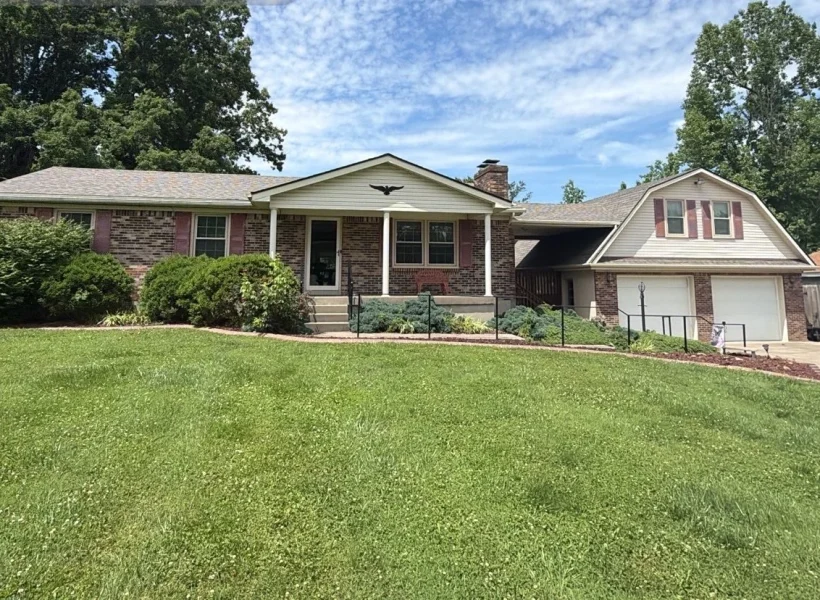
Deep charcoal Tamko Titan XT shingles on a red brick ranch with navy blue shutters and a black front door produce a roofline that looks deliberate rather than default — the dark charcoal anchoring the top of the home in strong contrast against the warm brick below, with the shutter and door color repeating the roofline tone through the facade. The finished street view of this Douglass Hills home shows a property that reads as sharp and well-maintained from every angle. Titan XT’s Class 3 impact rating adds a performance dimension to the aesthetic improvement — the next hailstorm that moves through these streets will meet a roof capable of handling it better than the one it damaged.
Storm Roofing and Free Inspections by Ragnar Roofing
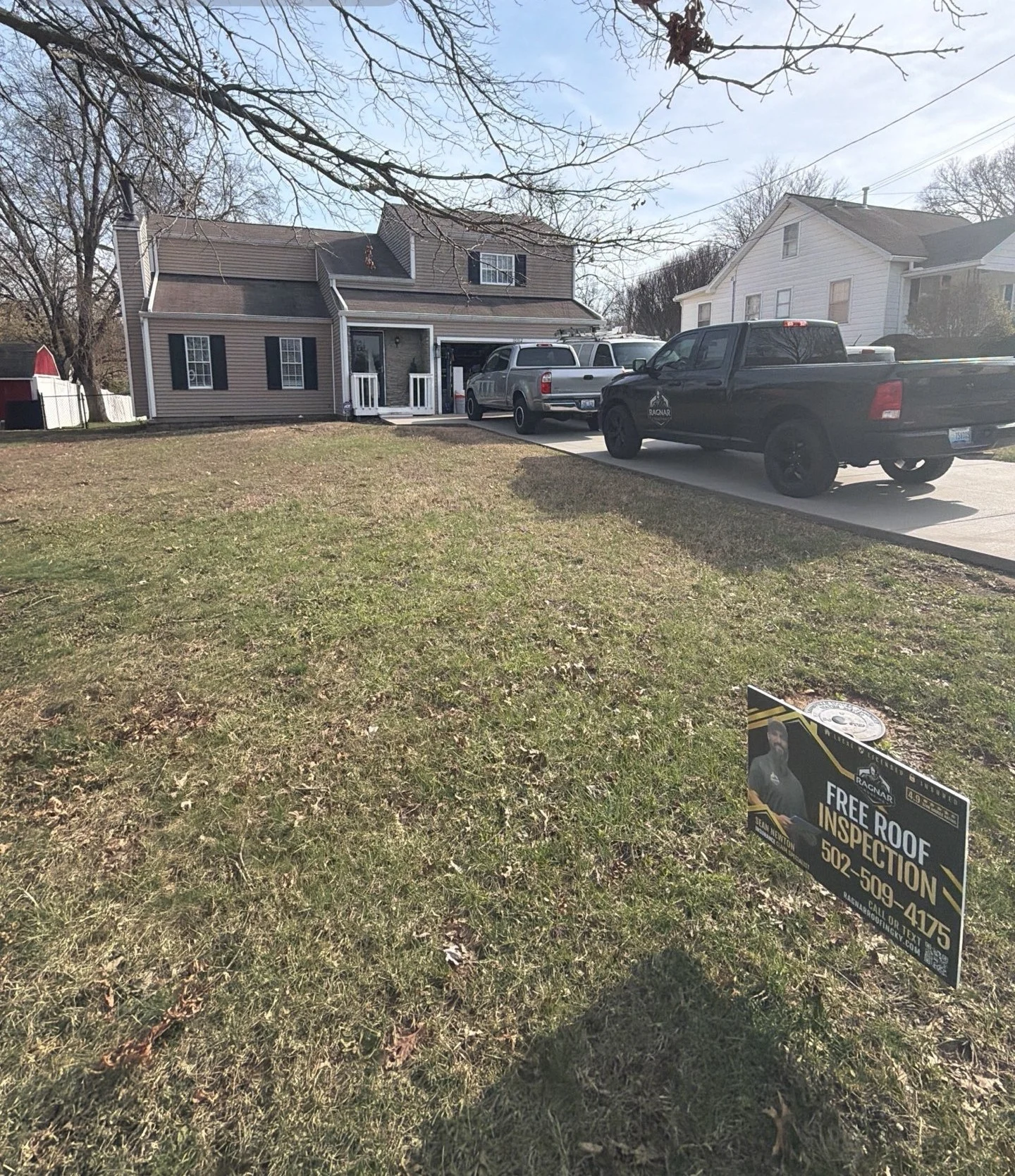
A free storm damage inspection is the beginning of a process that, when executed properly, ends with a homeowner’s insurance company funding a complete roof replacement they’ve been paying premiums to access for years. Ragnar Roofing serves Douglass Hills and the greater Louisville, KY area with the inspection documentation, claim management, and installation quality this Douglass Hills homeowner experienced — from chalk-circle hail documentation through skylight flashing, chimney detail, and Titan XT completion. Contact Ragnar Roofing at (831) 772-4627 to schedule your free inspection.