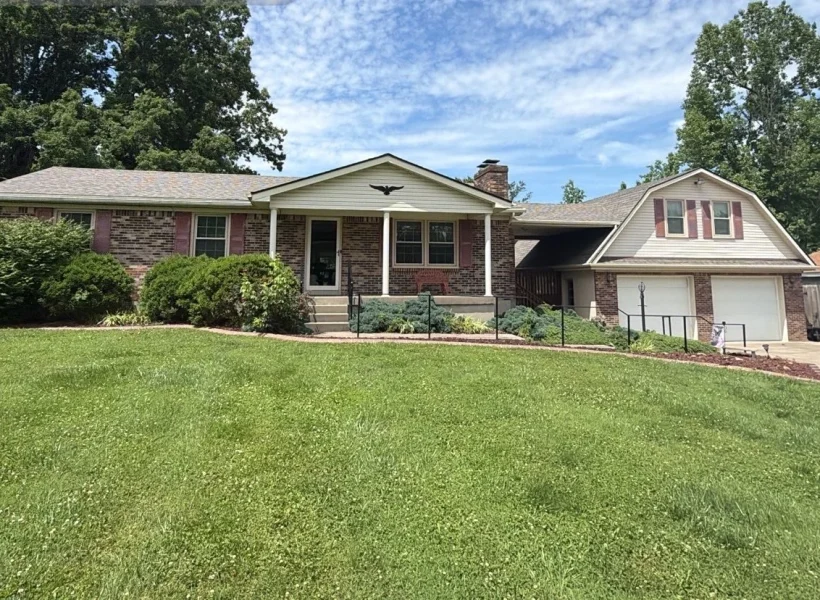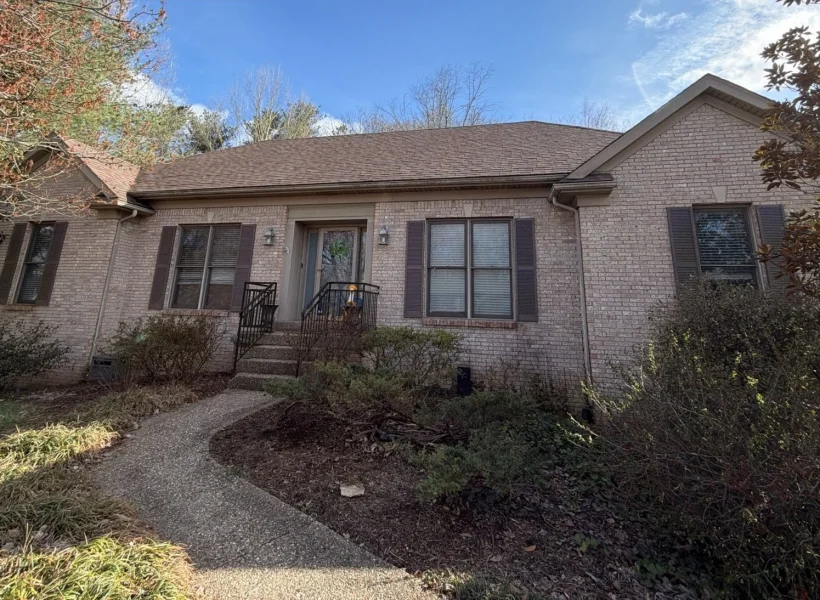


Some roofs look damaged from the street. Others reveal the true extent of what storms have done only when you pull the shingles back and look at what’s underneath. This Douglass Hills homeowner called Ragnar Roofing for a free storm damage inspection — and what the tear-off exposed at the chimney area told a story that no surface-level assessment could have captured. Aged, darkened plywood with visible moisture damage at the chimney base, compromised flashing that had been allowing water entry for years, and a roof system that needed far more than cosmetic attention. Insurance approved the full replacement, and the homeowner now has Tamko Titan XT shingles, new chimney step flashing, and a properly repaired deck underneath it all.
What a Free Inspection Actually Uncovers
A free storm damage inspection isn’t a look at the shingles from the driveway — it’s a systematic walk of every plane, every penetration, every valley, and every chimney base that evaluates both the visible surface and the conditions those surfaces are protecting. This Douglass Hills roof presented storm damage indicators on the shingle surface, but the chimney area revealed the deeper problem: flashing that had deteriorated to the point of allowing active water intrusion into the deck below. The darkened, moisture-damaged plywood at the chimney base isn’t storm damage in the traditional sense — it’s the cumulative result of failed flashing that had been leaking through weather event after weather event.
Identifying this condition during the inspection and including it in the documented scope is what produces a full replacement approval rather than a partial settlement that leaves the underlying problem unaddressed.
Deck Damage That the Shingles Were Hiding
When the old shingles came off, aged and discolored plywood boards revealed moisture infiltration patterns at the chimney base — dark staining running down from the failed flashing line into the deck field below. Several boards showed the color variation and surface deterioration that indicate moisture cycling through the wood over multiple seasons rather than a single acute event. This kind of deck damage doesn’t appear on its own — it requires a continuous water entry point, and the chimney flashing was providing exactly that.
Deck board replacement in the affected areas was completed before new underlayment and shingles went down — a non-negotiable step that ensures the new roofing system has a sound, dry substrate to perform from rather than covering up a moisture problem that would continue deteriorating beneath fresh materials.
Chimney Flashing That Had Run Its Course
The original flashing at the chimney base was in its final state — dark, oxidized metal with visible gaps and deterioration where it transitions from the chimney face to the roof surface. Chimney step flashing is the most demanding detail on any residential roof because it must simultaneously bond to two different materials — masonry and roofing — accommodate differential thermal movement between them, and remain watertight through decades of freeze-thaw cycles and storm events. When it fails, water doesn’t announce itself immediately. It finds paths slowly, soaking into the deck below over time in exactly the pattern documented during this inspection.
Replacing this flashing during the re-roof — cutting new step flashing pieces integrated into each shingle course along the chimney sides, with counter-flashing set into the masonry mortar joints above — is the only permanent solution for this category of leak.
Getting the Full Replacement Approved
The combination of surface storm damage, deteriorated chimney flashing, and moisture-compromised deck boards gave the insurance file a complete, well-documented scope that supported full replacement approval without dispute. When an inspection identifies and photographs all three categories of damage — shingle surface, flashing failure, and structural deck compromise — it presents the carrier with a comprehensive picture that makes partial approval difficult to justify. Full approval came through covering the complete re-roof scope, and installation was scheduled from there.
This outcome reflects the value of having a contractor who documents thoroughly rather than reporting only what’s easiest to see from the surface.
Tamko Titan XT Across a Large Multi-Plane Roof
Tamko Titan XT shingles in warm brown-gray tones now cover the full expanse of this large residential roof — multiple planes, various vent flashings, pipe boots, and low-profile attic vents all integrated cleanly into the new shingle field. The Titan XT’s Class 3 impact rating provides meaningfully stronger resistance to future hail and storm events than the standard dimensional shingles it replaced — a relevant specification for a home that just documented legitimate storm damage across its previous roof system. The warm brown-gray color works naturally with the tan brick chimney, complementing the masonry without competing with it.
The multiple low-profile attic vents distributed across the field and the new pipe boot flashings at each penetration point confirm that every component of the roof system received attention during the installation — not just the visible shingle surface.
The Finished Chimney Detail
New black step flashing runs cleanly along the base of the tan brick chimney, with each piece integrated into the shingle course beside it and the counter-flashing terminating against the mortar joint above. The transition from chimney face to roof surface is tight, clean, and correctly sequenced — water running down the chimney face hits the counter-flashing and is directed outward over the shingle surface below rather than finding a path into the deck. This is what the original failed flashing could no longer deliver, and what a properly rebuilt chimney detail provides for the next several decades of weather seasons.
The new Titan XT shingles surrounding the chimney are aligned precisely with the field pattern, with no disruption at the intersection — a finishing detail that confirms the chimney work was integrated into the installation sequence rather than treated as an afterthought.
Storm Damage Roofing and Free Inspections by Ragnar Roofing
Douglass Hills homeowners who suspect storm damage on their roof have nothing to lose and potentially a full replacement to gain by scheduling a free inspection with a contractor who knows what to look for beyond the shingle surface. Ragnar Roofing serves Douglass Hills and the greater Louisville, KY area with free storm damage inspections, complete insurance claim management, and Tamko Titan XT installations that address every layer of the roof system from deck to ridge cap. Contact Ragnar Roofing at (831) 772-4627 to schedule your free inspection.